
Two researchers from the University of Cagliari have presented their work on artificial intelligence regulation and immersive technologies at international IEEE conferences in Argentina and Uruguay, exploring both the opportunities and challenges of digital transformation.
Professors Massimo Farina and Maurizio Murroni took part in IEEE ARGENCON 2026, held from 11 to 13 November at the National University of Córdoba in Argentina, before appearing as keynote speakers at IEEE URUCON 2026, held in Montevideo, Uruguay, from 16 to 18 November.
Their presentations explored two different areas of research. While Professor Farina examined how laws can protect individuals as artificial intelligence becomes more widespread, Professor Murroni introduced the European HEAT (Hybrid Extended reAliTy) project, which is developing new ways for people to share immersive experiences across physical distances.
Two Conferences, Two Perspectives on Digital Technology
At IEEE ARGENCON 2026, the researchers shared their work with an international audience, addressing questions about the development and use of emerging technologies.
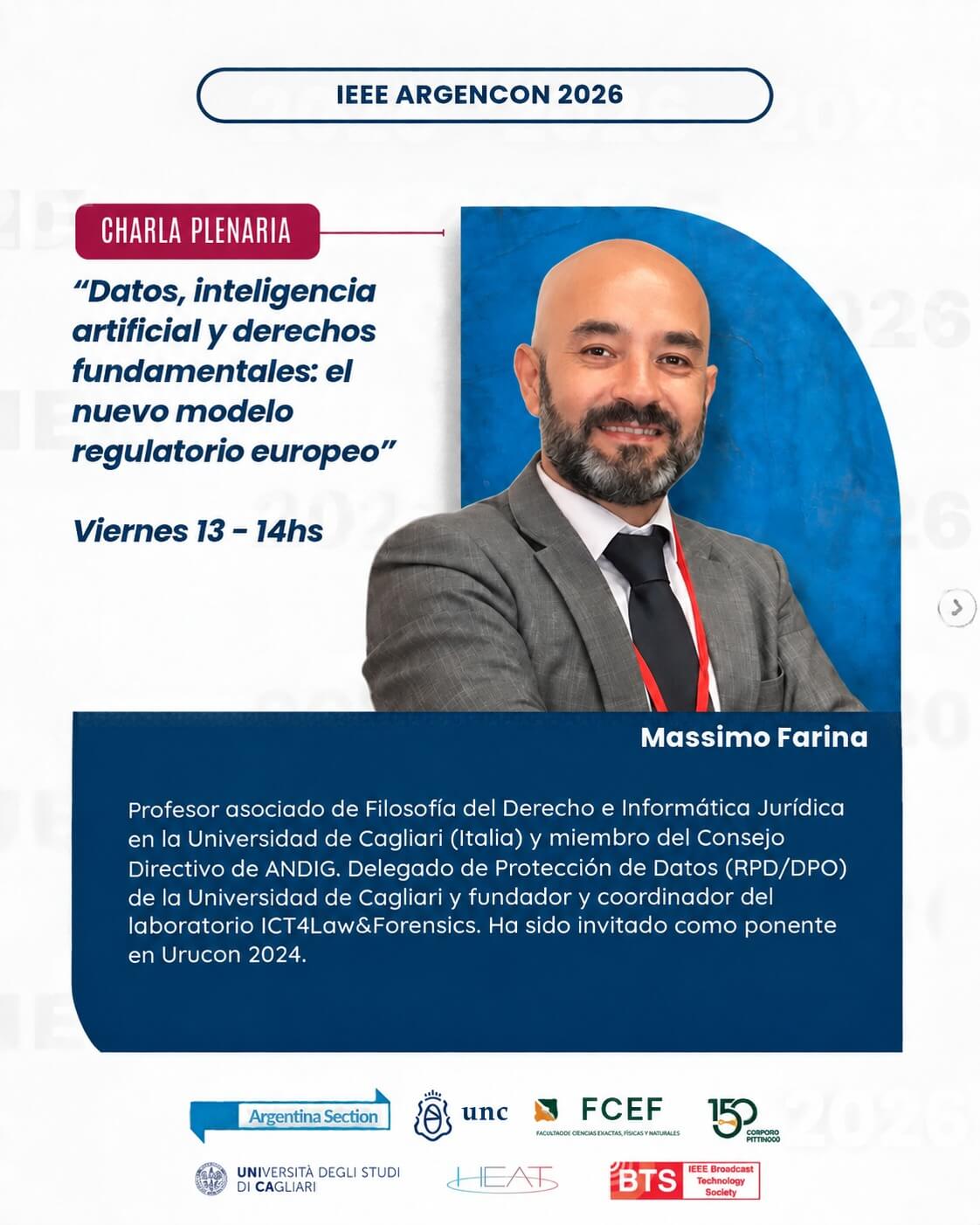
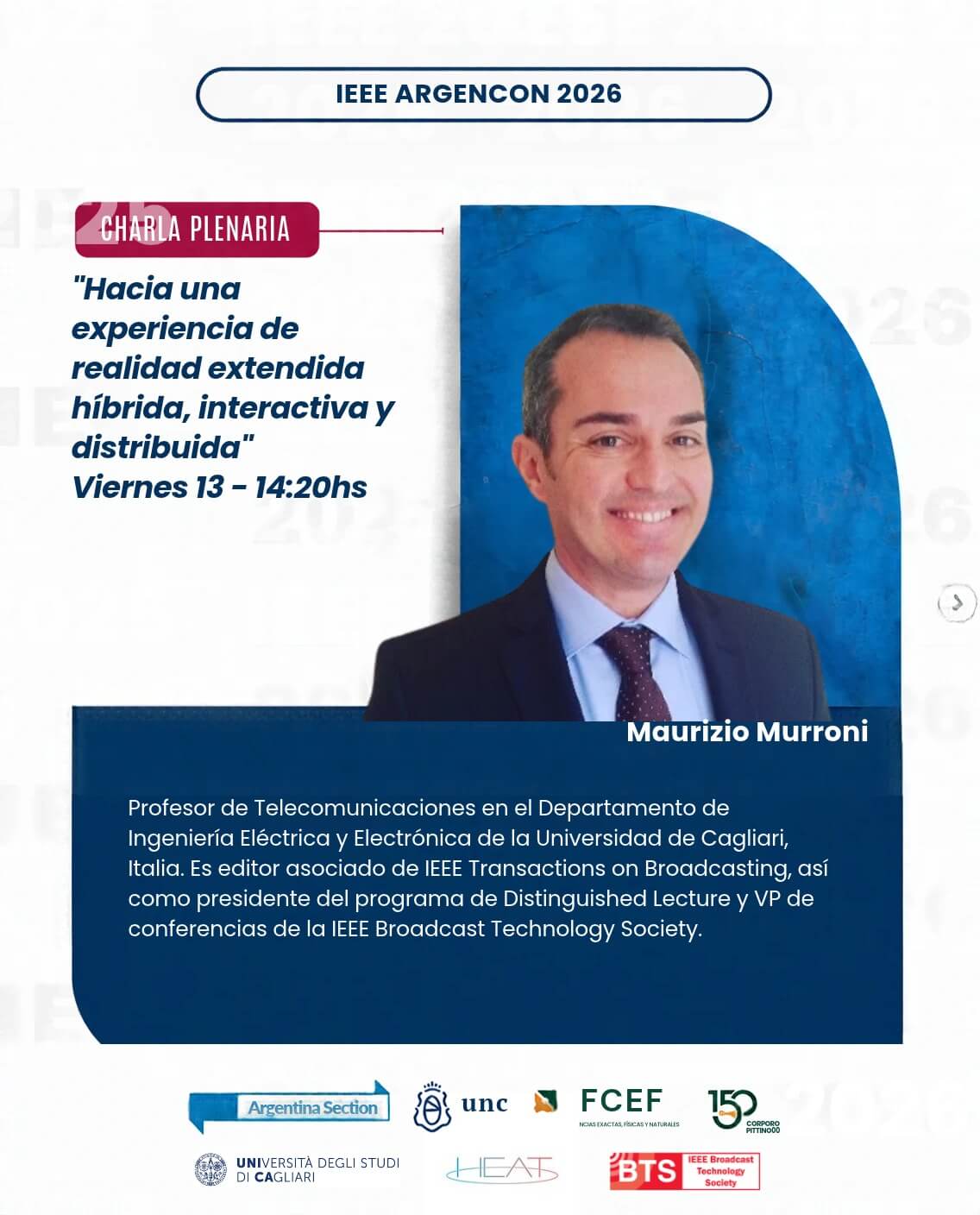
The discussions continued at IEEE URUCON 2026 in Montevideo, where both professors participated as keynote speakers.
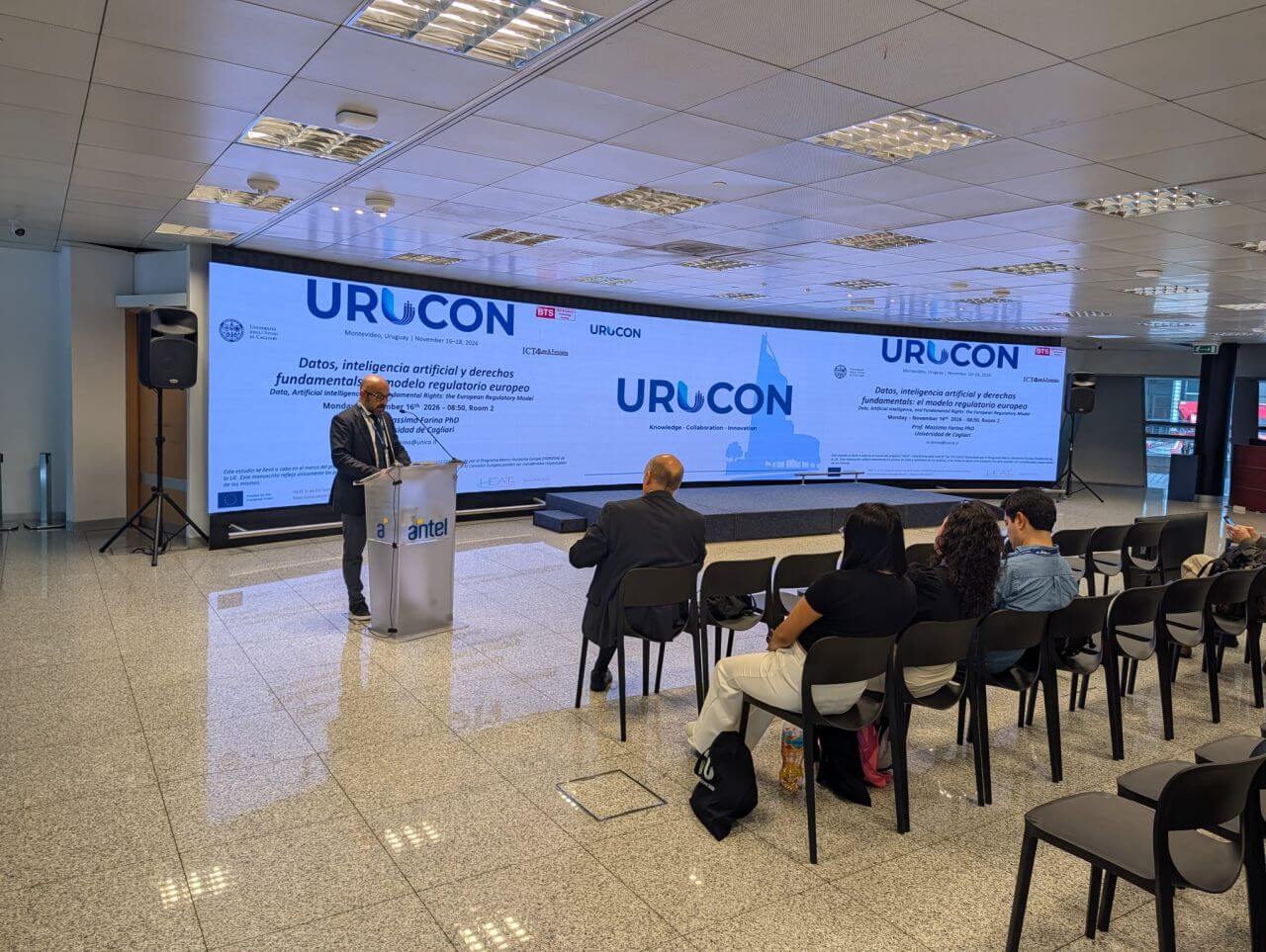
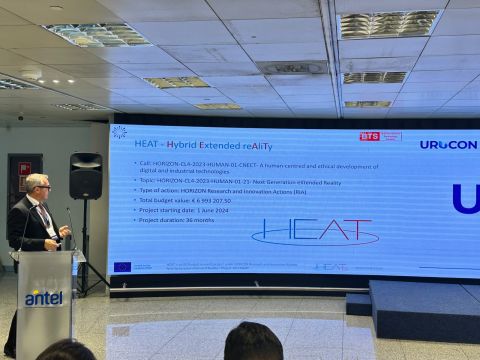
Across the two conferences, their presentations covered the evolving European approach to AI regulation and the potential of extended reality (XR) to connect people in physical and virtual environments.
Protecting Individual Rights in the Age of AI
Artificial intelligence is increasingly being used to process information, support decisions and deliver services. But its growing influence also raises questions about privacy, accountability and the protection of individual rights.
In his presentation, “Data, Artificial Intelligence and Fundamental Rights: The New European Regulatory Model”, Professor Massimo Farina explored how European regulations are evolving to address these issues.
His talk examined the relationship between data protection, the governance of AI systems and fundamental rights, including the legal responsibilities that arise when these technologies affect people’s lives.
At URUCON, he also considered the relevance of Europe’s regulatory approach to Latin America, where questions about the use and oversight of AI are becoming increasingly important.
Bringing People Together Through Extended Reality
While Professor Farina focused on the legal challenges surrounding new technologies, Professor Maurizio Murroni explored how they could help people connect across distances.
Imagine attending a cultural event in another country, exploring its surroundings through a VR headset and interacting with people who are physically there.
This is the type of experience being investigated by HEAT (Hybrid Extended reAliTy), a European research project exploring how remote and on-site participants can come together in shared immersive environments.
In his presentations, “Towards a Hybrid, Interactive and Distributed Extended Reality Experience” at ARGENCON and “HEAT: Towards a Hybrid, Interactive, and Distributed Extended Reality Experience” at URUCON, Professor Murroni introduced the project’s vision and the technologies supporting it.
By combining holographic imagery, three-dimensional representations of real-world environments, multisensory media and social virtual reality, HEAT is investigating how people in different locations can interact within a shared experience.
Remote participants could explore captured physical spaces through VR, while those attending in person could interact with holographic representations of people joining from elsewhere.
The research could open up new possibilities for cultural performances and other shared activities where physical distance would otherwise limit participation.
Sharing Research Beyond Europe
The two conferences offered opportunities for the University of Cagliari researchers to share their work with audiences across South America.
From the legal questions raised by artificial intelligence to the possibilities offered by immersive environments, their presentations addressed different aspects of how digital technologies are being developed and used.
For HEAT, the events also provided an opportunity to introduce its research into hybrid extended reality to a wider international community and contribute to discussions about how people might experience and interact with digital environments in the future.
Find out more: