
The HEAT consortium held the XRTheater Pilot Meeting in Sardinia, Italy, on 25–26 June 2026, as part of the project’s ongoing work to develop and assess hybrid multisensory XR experiences for the performing arts.
The two-day meeting brought partners together to test, observe and evaluate different components of the XRTheater experience across both live and virtual settings.
On 25 June, activities took place at Teatro Grazia Deledda in Paulilatino. The day focused on the XRTheater Live Experience, where the performance was assessed in a theatre environment. Partners took part in two assessment sessions, examining how the live performance and XR technologies worked together in practice.
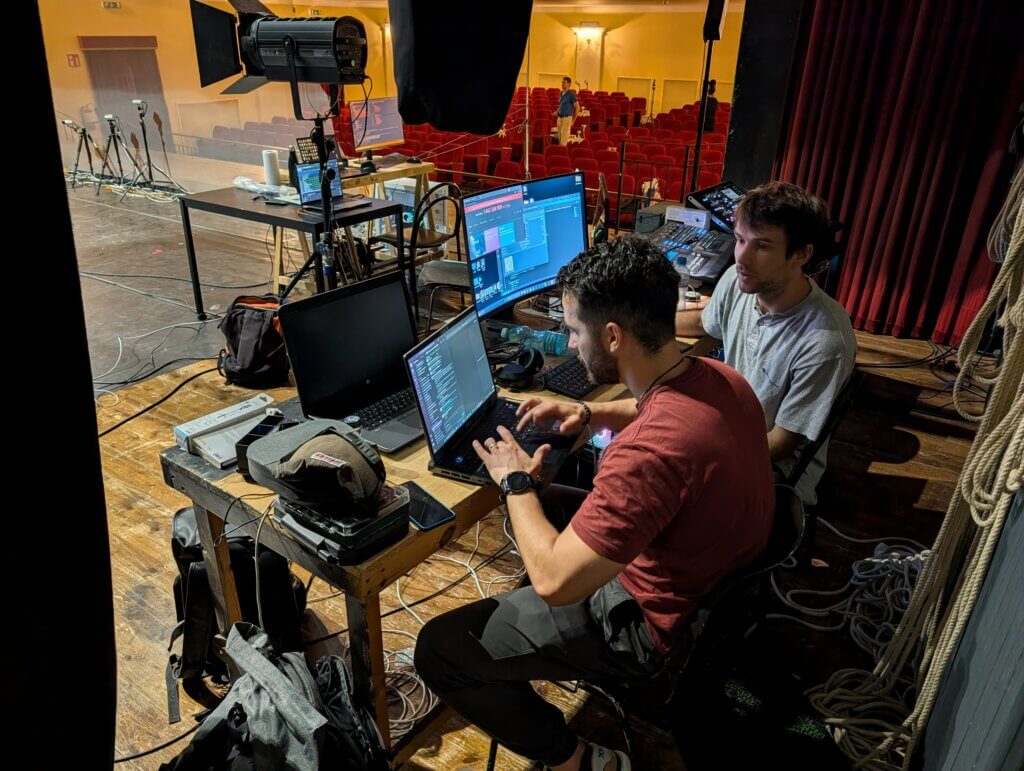
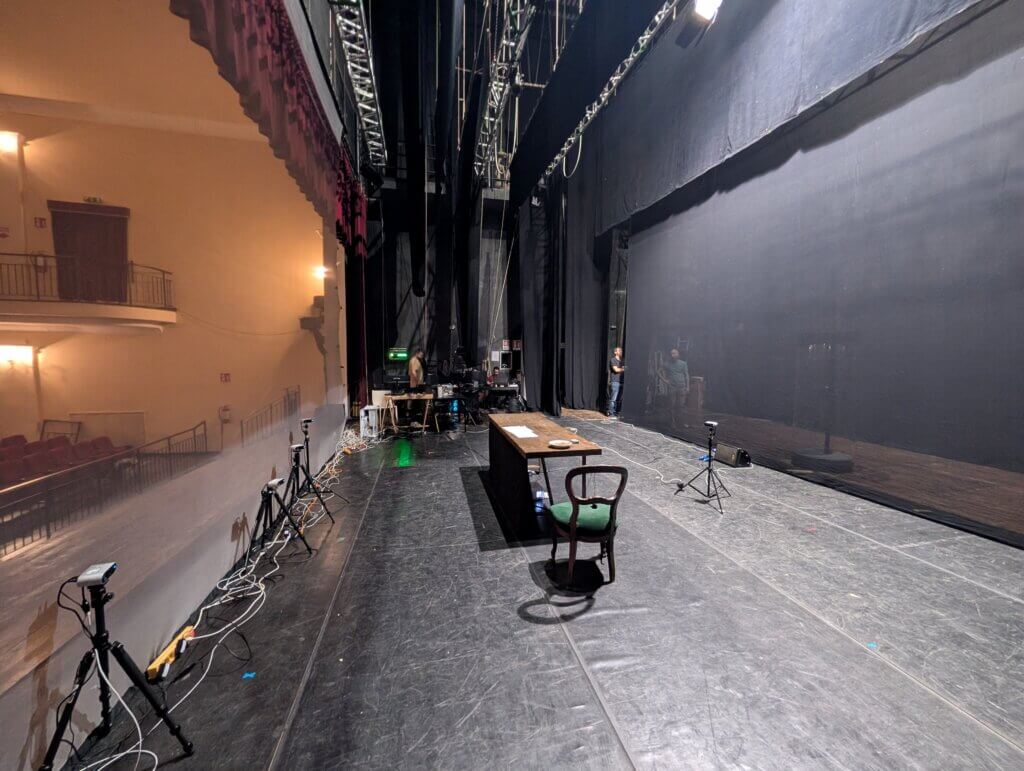
On 26 June, the meeting continued at the QoE Lab, Cagliari Digital Lab, at Ex Vetreria Park in Pirri. The second day focused on the XRTheater Virtual Experience, with assessment sessions dedicated to the virtual setup. These activities supported further discussion around the technical configuration, multisensory pipeline and Quality of Experience evaluation process.
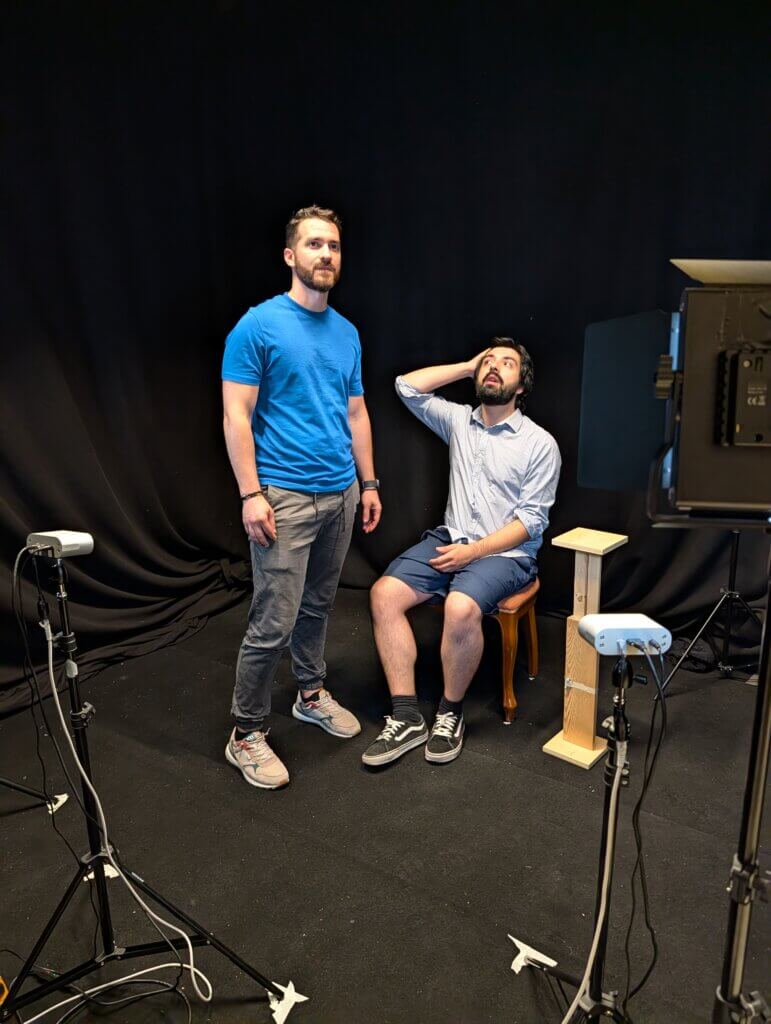
The XRTheater pilot explores how Extended Reality can connect live performances with remote audiences, combining physical and digital spaces within a shared immersive experience. During the meeting, partners worked with a range of technologies developed within the HEAT project, including live volumetric capture and streaming, point cloud and Gaussian Splatting rendering, virtual reality, immersive spatial audio, scene-dependent olfactory stimulation, haptic feedback, and holographic visualisation through Holo Fan and Holo Gauze systems.
The pilot activities are based on Disìgiu, an original theatrical performance designed to examine how multisensory technologies can support storytelling while preserving the emotional intensity of live theatre.
The meeting provided an important opportunity to assess the current state of the XRTheater Live Experience and XRTheater Virtual Experience, evaluate the interaction between live and prerecorded volumetric actors, and gather feedback to inform the next stages of technical and creative development within HEAT.
HEAT thanks all project partners for their collaboration and commitment, as well as the teams at Teatro Grazia Deledda and the QoE Lab at Ex Vetreria Park for hosting the meeting activities.
Through this work, HEAT continues to explore how immersive and hybrid technologies can contribute to the future of cultural and performing arts experiences.